 AUTOYOS
Dry Eye Disease
The tear film and eye surface lose their balance, causing dryness, burning, grittiness or fluctuating vision. Long screen hours make it more likely.
 Advanced Ocular Kinematics
Dry Eye Disease and Computer Vision Syndrome are the eye conditions of the screen age. BlinkOn clips onto a screen, captures natural blinking with a high-speed camera and turns a 3–4 minute self-guided test into one clear screening report.
Recognised & supported by



















At a screen, people blink less often and less completely. A blink is over in about a tenth of a second. Partial blinks leave the lower cornea exposed, starve the tear film and drive dryness, grittiness and strain. It happens too fast for the eye, or a standard camera, to see.
1. Patel S et al. Optom Vis Sci 1991;68(11):888–92. 2. Wang MTM et al. Ocul Surf 2018;16(4):424–29.
The tear film and eye surface lose their balance, causing dryness, burning, grittiness or fluctuating vision. Long screen hours make it more likely.
Also called Digital Eye Strain. Extended screen tasks bring tired eyes, temporary blur and headaches, from students and gamers to working professionals.
Answer six quick questions from the OSDI-6, the symptom questionnaire recommended by the TFOS DEWS III Dry Eye report. Think about the last week.
OSDI-6: Pult H, Wolffsohn JS. Ocul Surf 2019;17(4):817–21, a short form of the Ocular Surface Disease Index (OSDI©), © Allergan, Inc. (now AbbVie). Recommended in TFOS DEWS III: Diagnostic Methodology, Am J Ophthalmol 2025. This test checks symptoms only and is not a diagnosis.
Under exam conditions, people know they're being watched, bright slit-lamp light provokes reflex tearing, and dyes disturb the tear film. BlinkOn records while the user is simply absorbed in a task on screen.
| BlinkOn | Conventional | |
|---|---|---|
| Capture speed | High speed | Standard speed |
| User position | Natural, at the screen | Fixed chin rest |
| Illumination | None needed | Added light |
| Contact & dye | Zero contact | Fluorescein / contact |
| Operator | Self-guided | Trained examiner |
Full closure lasts only milliseconds. With a standard camera, frames can land either side of it, so a complete blink is recorded as partial. BlinkOn uses a high-speed camera, so the true blink is measured.
Illustration. Lower frame rates inflate incomplete-blink counts: Zheng Q et al., Transl Vis Sci Technol 2022;11(3):38 · Navascues-Cornago M et al., Ocul Surf 2026;40:22–30.
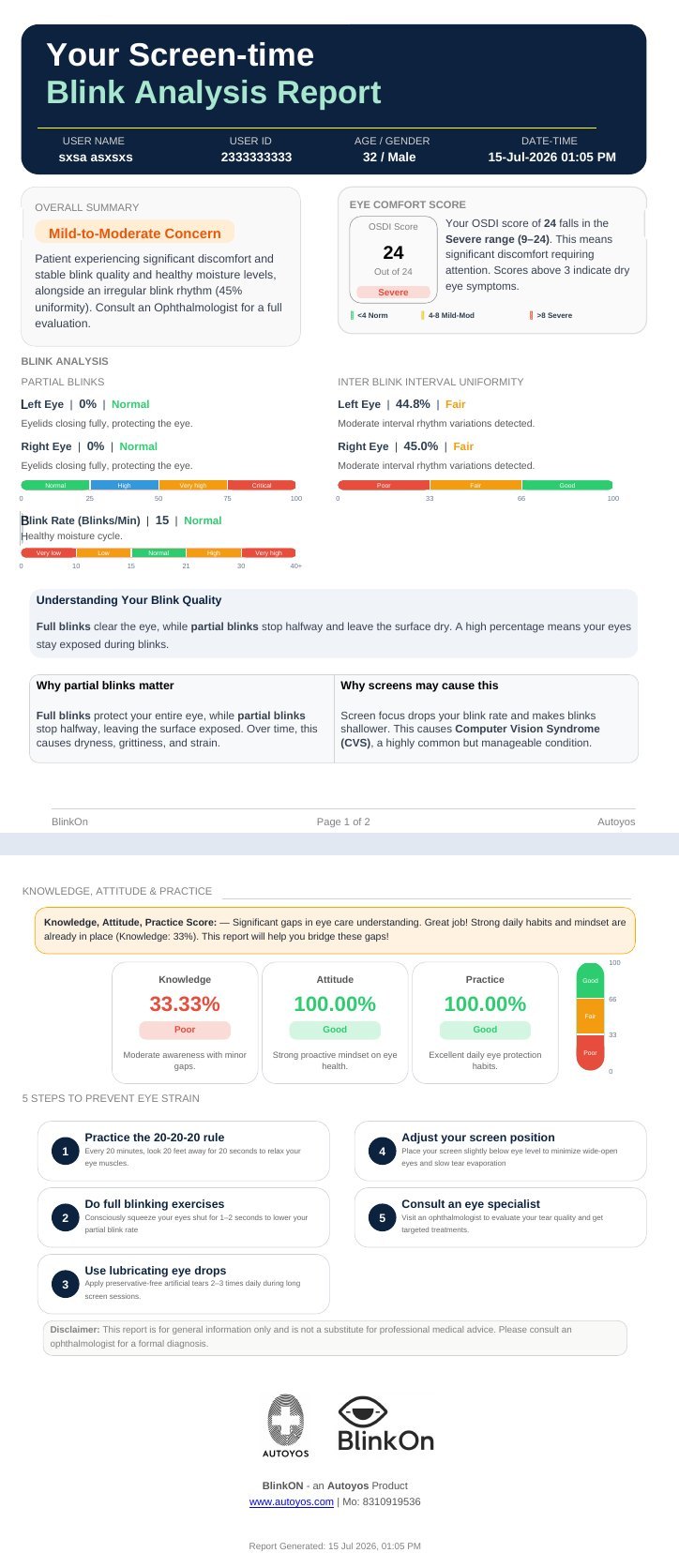
BlinkOn combines high-speed blink biometrics with evidence-based questionnaires into a two-page report that guides clinical decisions — sent to the user, with a copy to your clinic or hospital email.
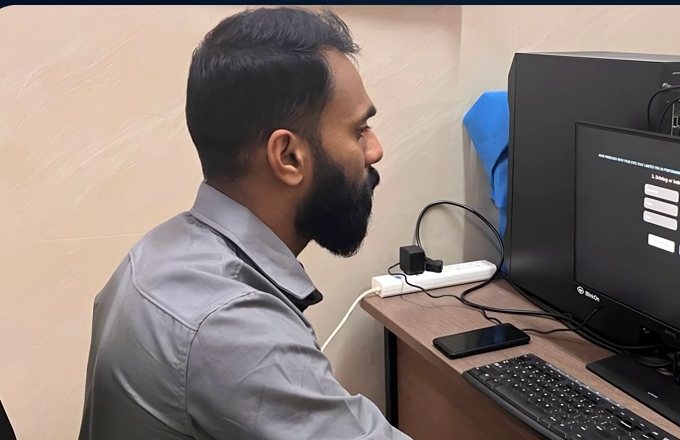
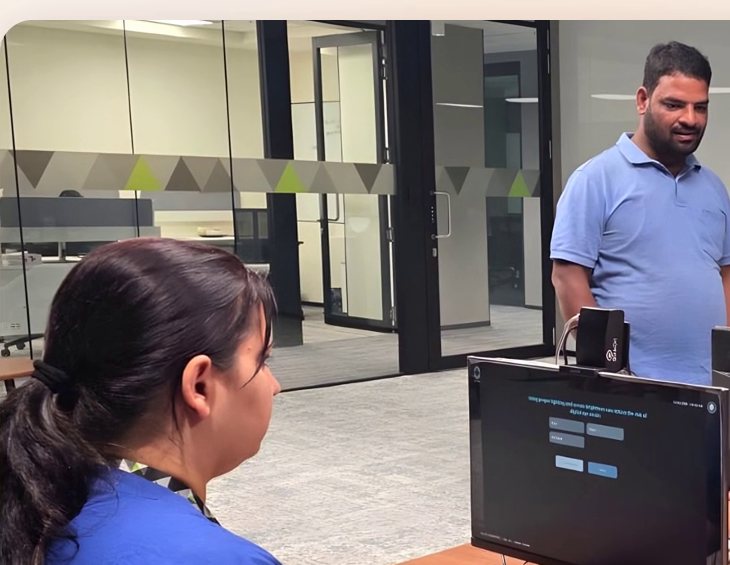
The user is guided step by step on screen, in their own language, while BlinkOn records blinks in the background.
The user sits 50–75 cm from the screen. Live feedback checks face position and lighting.
Informed consent and a few details on screen. The mobile number becomes the User ID.
3–4 minutes answering questionnaires while natural blinking is captured by a high-speed camera.
Report generated and emailed to the user and your clinic automatically.
New age eye care doesn't end at a test. BlinkOn screens for the problem and provides the evidence of progress. In between, the free EyeD app helps patients follow their doctor's plan every day. Together they turn a one-off test into continuous, measurable eye care.
BlinkOn gives doctors objective evidence of patient outcomes between visits. Values shown are for illustration only.
From clinics and opticals to corporate floors and pharma camps, BlinkOn turns a hidden risk into a measurable, actionable result.
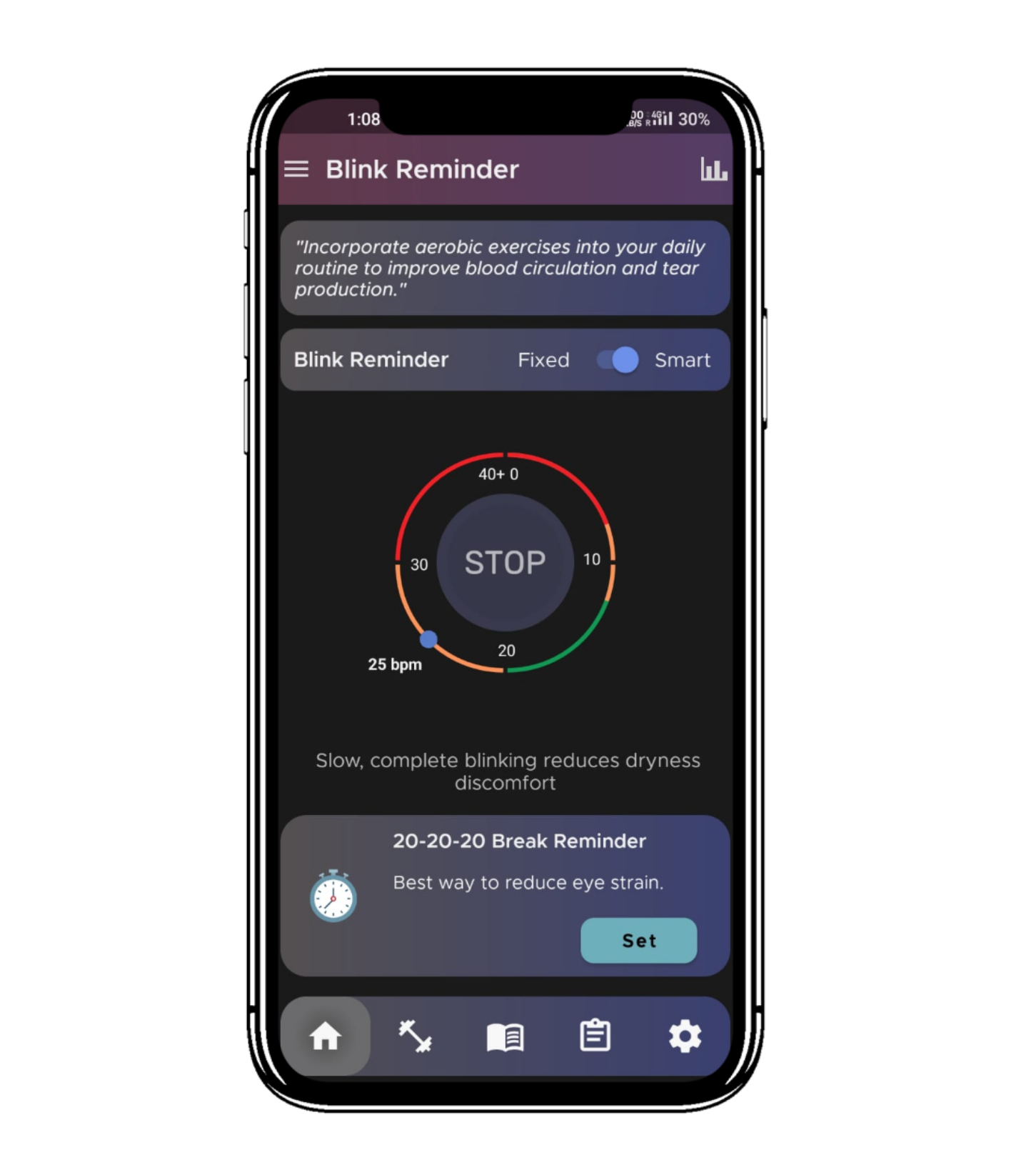
A free app doctors can recommend alongside their treatment plan. EyeD supports healthier blinking and screen habits every day, so the next BlinkOn screen tells a clearer story.
EyeD supports healthy habits. It does not replace advice or treatment from an eye-care professional.
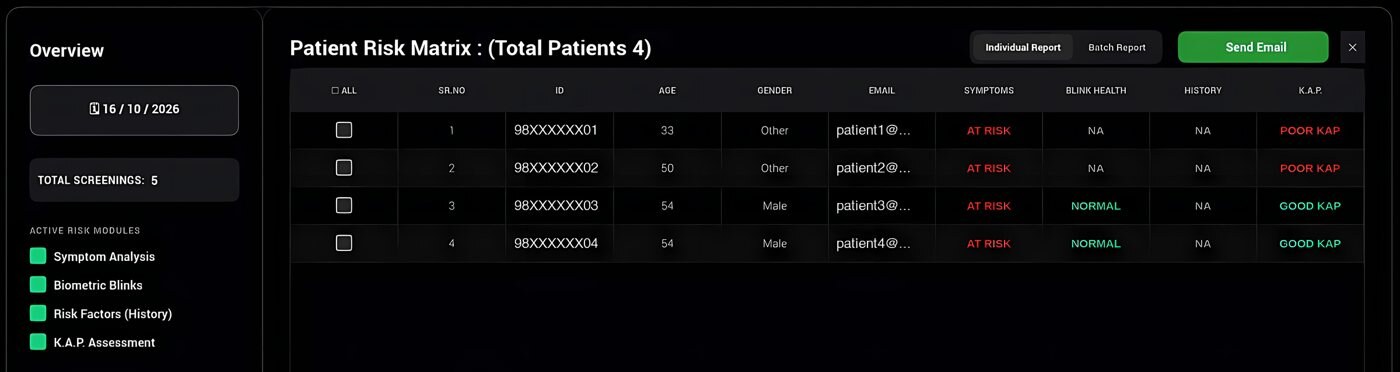
A password-protected Admin Control Center gives your team a daily Patient Risk Matrix and one-click report dispatch.
CDSCO Reg. No. AUTOYO-Benga-KA/M/MD/026236 · Clinically evaluated in 500+ people · Presented at ASCRS San Diego & ESCRS Vienna.


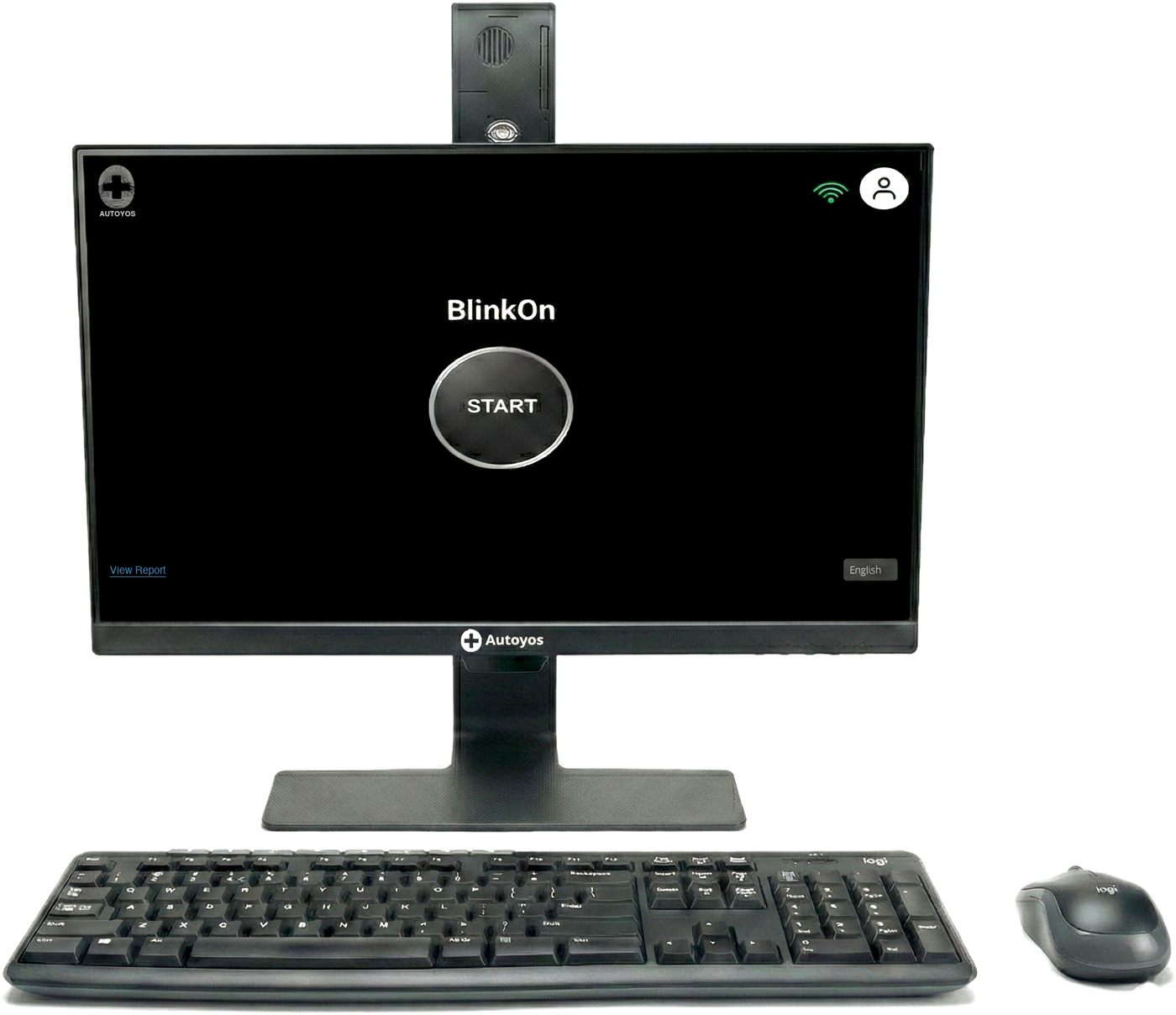
Display, BlinkOn, keyboard and mouse, adapters and cables pack into one bag, under 2 kg.
From clinics and corporate offices to optical stores and screening camps, BlinkOn goes where people are.
Unpack, clip BlinkOn onto the display and power up. Then a self-guided 3–4 minute test and one clear report.
| Model | BO-01 |
|---|---|
| Camera | High-speed · zero contact |
| Illumination | None — ambient light only |
| Measurements | Blink rate · Partial blinks · Inter-blink interval uniformity (each eye) |
| Questionnaires | OSDI-6, CVS-Q, K.A.P., Ocular Surface & Systemic History, Optometrist Visit Inquiry |
| User distance | 50–75 cm from the display |
| Users | Ages 10–80 |
| Connectivity | Wi-Fi (min. 5 Mbps upload) |
| Device size / weight | 70 × 40 × 60 mm · under 500 g, portable |
| Full kit weight | Under 2 kg, carried in one backpack |
| Languages | English + Indian languages |
| Warranty | 12 months from billing |
| Regulatory | CDSCO registered · ISO 13485:2016 facility |
Full technical datasheet available on request. Book a demo or get a quote.
See a live screening and sample report, and get pricing for your clinic, hospital, corporate programme or partnership.
No. BlinkOn is a screening aid. Its report helps qualified healthcare professionals assess Digital Eye Strain and Dry Eye Disease, and must be interpreted together with a clinical examination.
The screening is self-guided on screen. Optometrists, ophthalmologists, ophthalmic assistants or trained clinical staff oversee it — no special technical training is needed beyond the Instructions for Use. One person can oversee 4–5 units.
About 3–4 minutes of questionnaires while blinking is recorded in the background. The report is generated and emailed automatically.
A stable desk and chair (user 50–75 cm from the screen), a grounded 200–240 V outlet, Wi-Fi with at least 5 Mbps upload, and bright, even room lighting with no window behind the user.
Data is collected only with informed consent, stored locally on the device and sent only to the user and your registered clinic email. The clinic remains the data fiduciary under the DPDP Act, 2023.
English and Indian languages including Hindi, Kannada, Tamil, Telugu, Marathi and Malayalam, enabled by the administrator.
12 months' warranty from the date of billing, covering manufacturing defects and component failures under normal use, with service and software updates from Autoyos.
In Autoyos Blink Care, BlinkOn screens and the eye-care professional diagnoses. Alongside their treatment plan, the doctor can recommend the free EyeD app for blink reminders, 20-20-20 breaks and eye exercises between visits. A follow-up BlinkOn screen then gives an objective before-and-after comparison. Connected features, such as BlinkOn results arriving in EyeD and adherence summaries for doctors, are coming soon.
Yes — select "Distributor / channel partner" in the form above and tell us your region.
Book a demo for your clinic, hospital, corporate programme or partnership.